One year with a Parthenocissus tricuspidata shohin
A year of growth, a repotting and more than one styling session. These six photographs show how a Boston ivy bonsai changed once the foliage was no longer hiding the branch structure.
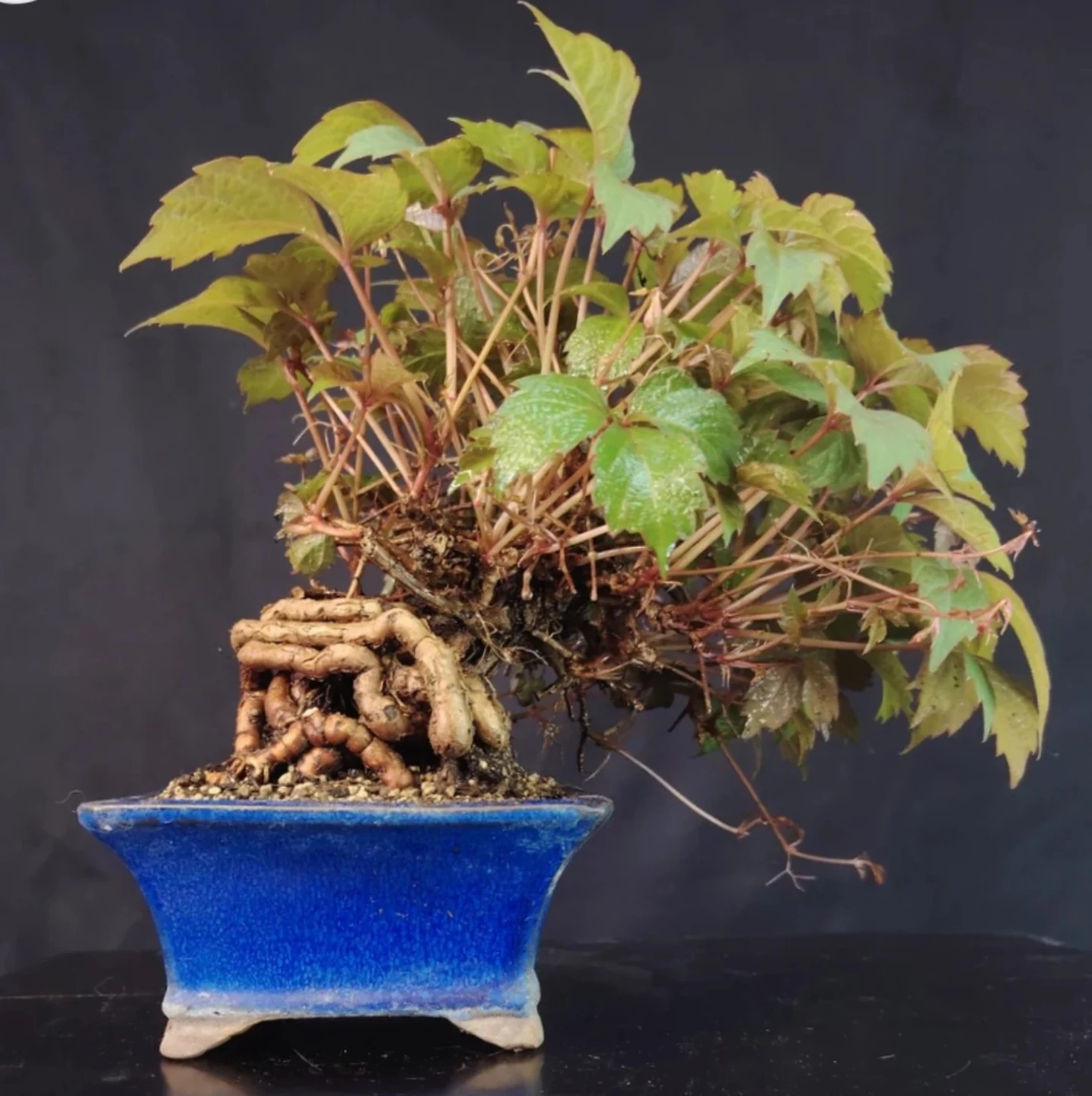
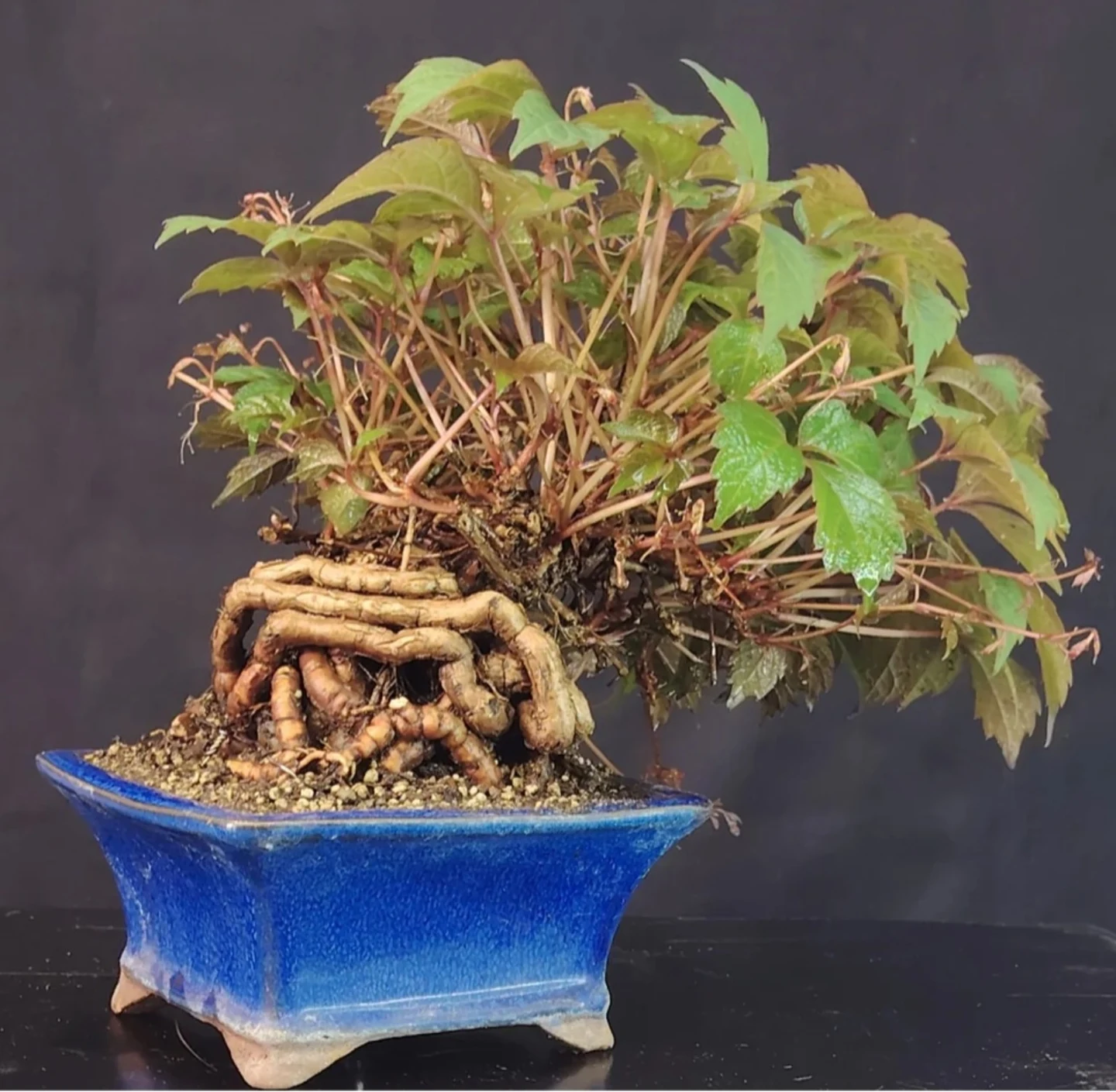
The starting point in the rectangular pot
In the earliest photographs, against the black backdrop, the tree is still in a rectangular blue pot. The growth has filled the outline, but it is hard to tell which shoots are doing useful work for the design. Follow the roots instead. They emerge in a knot above the soil, and the trunk carries that movement out over one side of the pot. That line is already there before the styling makes it easier to see.
The intermediate stage after repotting and wiring
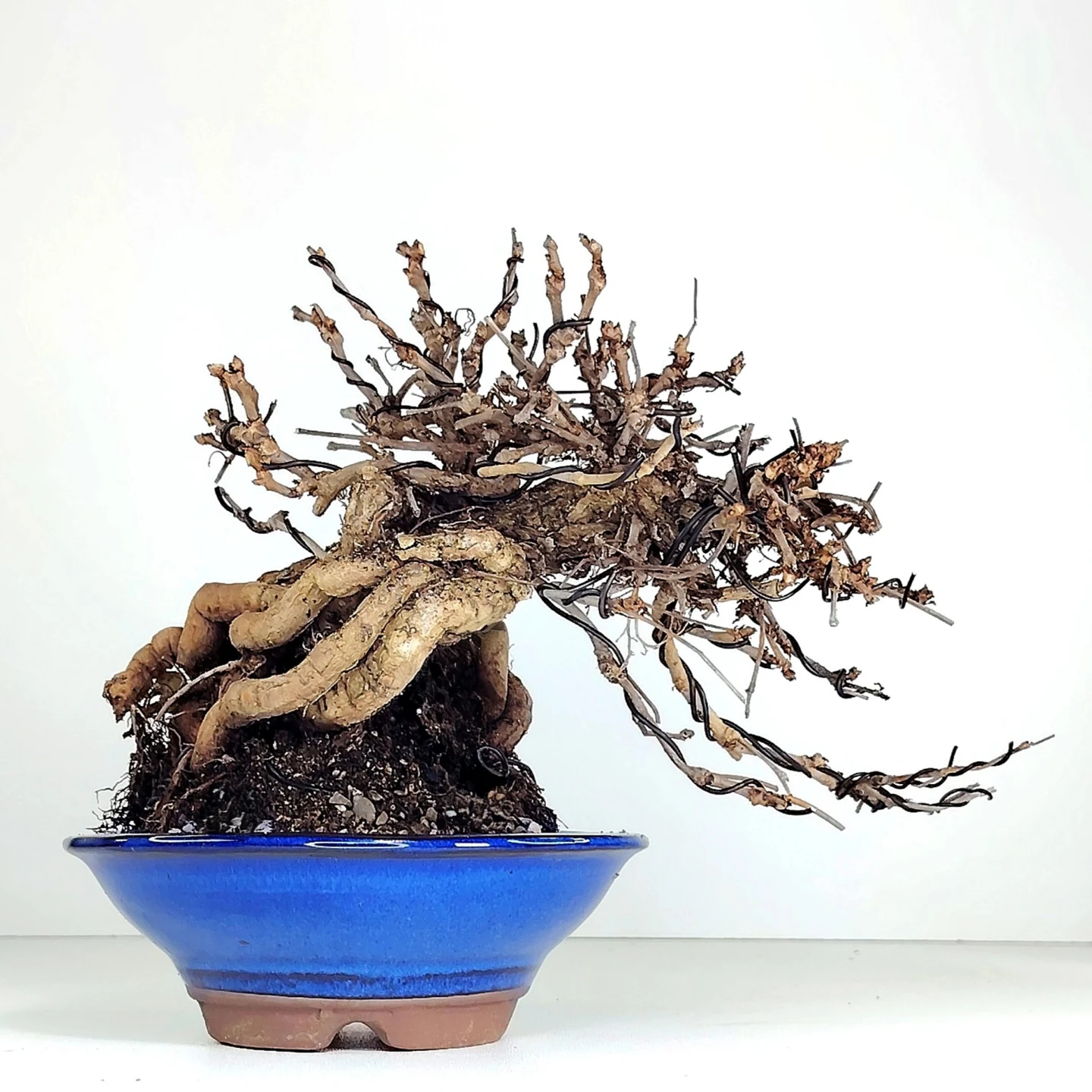
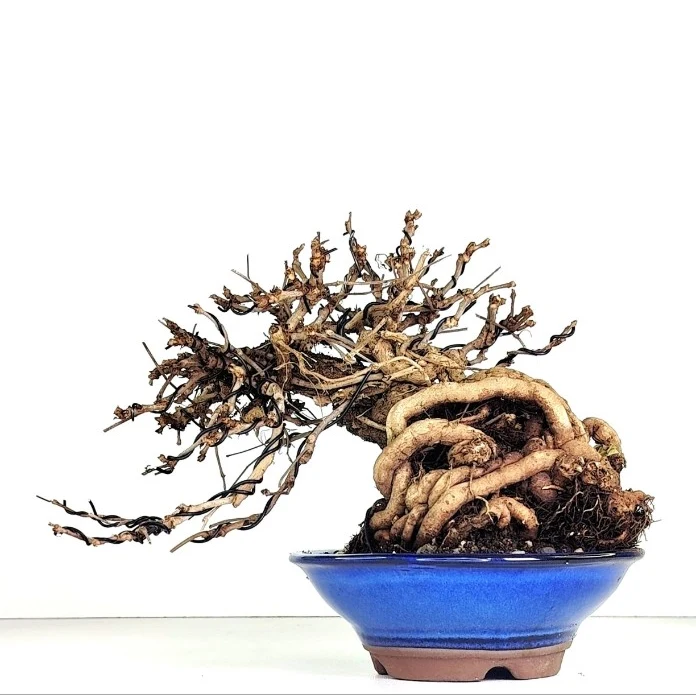
The white-background photographs show the tree in a shallower, round blue pot. The glaze is still blue, a useful constant when comparing the two pots. What changes is the outline beneath the roots. The lower rim gives the base more visual weight, while the round pot has less of a directional line of its own than the rectangle.
With the foliage gone, the wire is visible and so is the branch that drops below the rest of the crown. Look underneath it. The space between that branch and the root base is now part of the composition. From the reverse side, the broad arcs of the roots give the descending line a different counterweight.
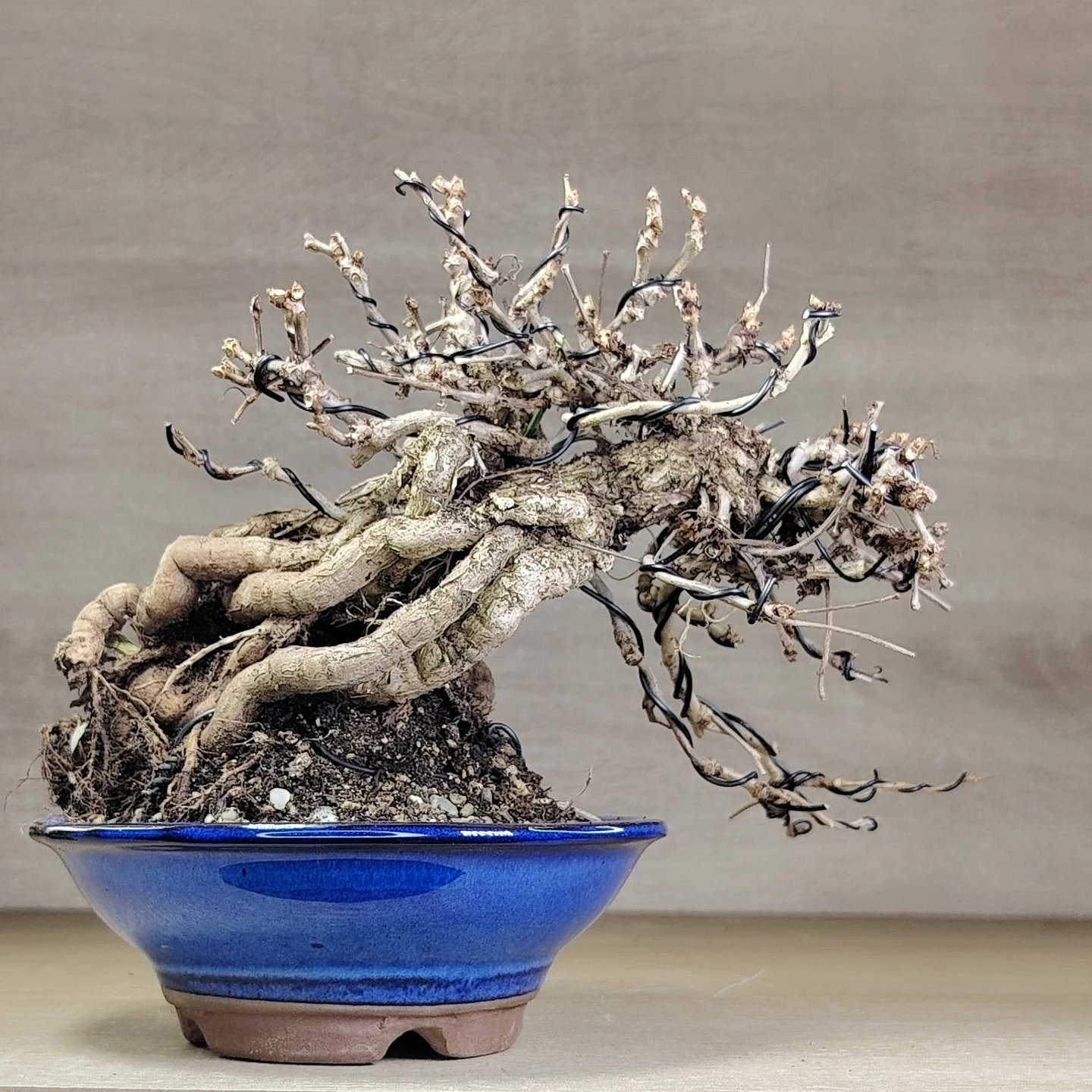
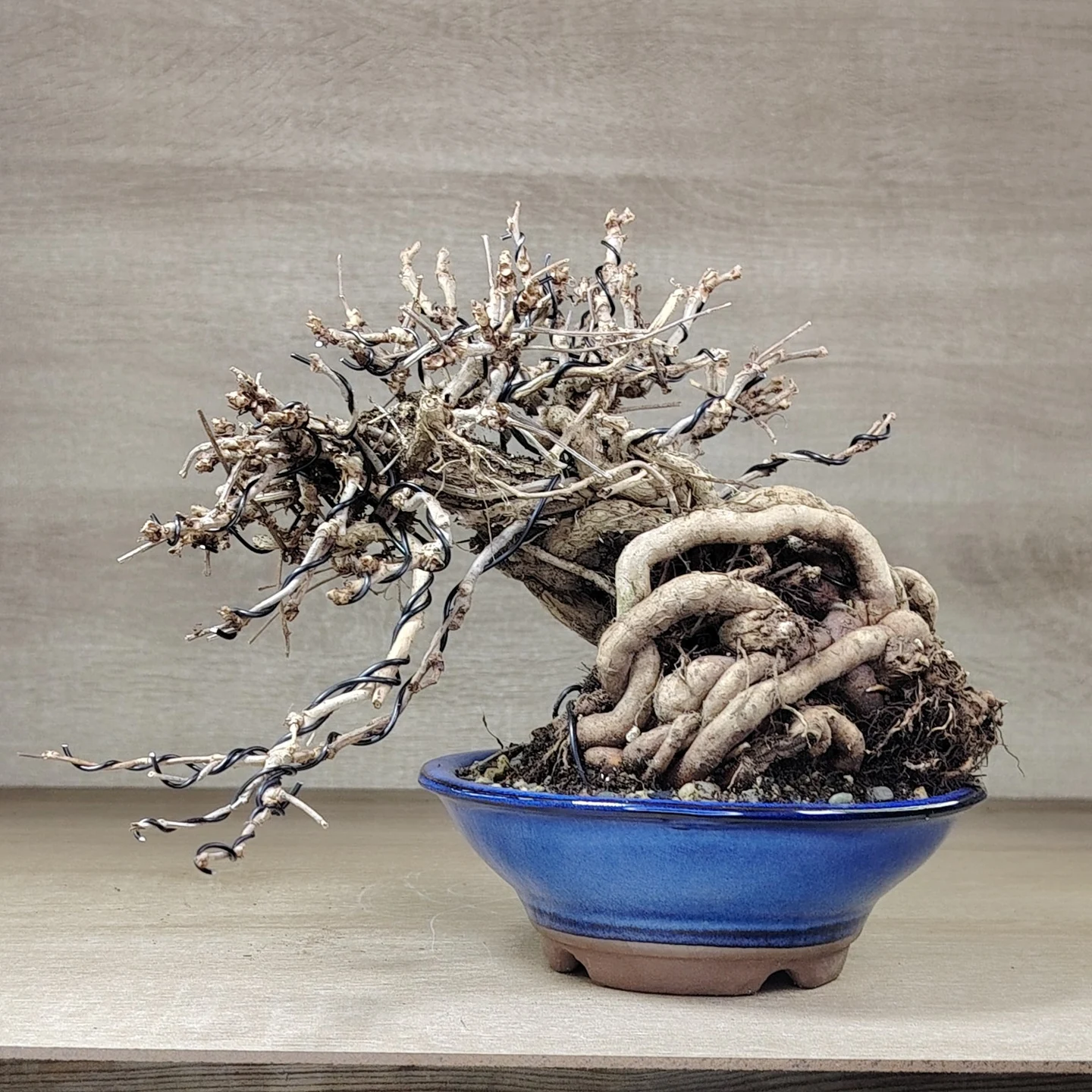
The latest styling from both sides
The photographs against the light brown backdrop are the most recent. In one view, the trunk leads the eye towards the low branch. Turn the pot and the large exposed roots take over. Comparing the two views is more useful than trying to pick a front from a single photograph. It shows how differently the same structure reads when the root mass sits behind the trunk or directly in front of you.
What to look for in the next flush
This is a stage in development, not a finished silhouette. When the leaves return, the useful comparison will be with the first two photographs. Can the crown fill in without closing the gap beneath the low branch? Can the roots still be read at a glance? The difference between the first and last pair is not how much foliage the bonsai carries. It is how much of the structure the foliage can afford to hide.
For more examples of exposed roots, small pots and branch structure, browse the BlogBonsai photo gallery.