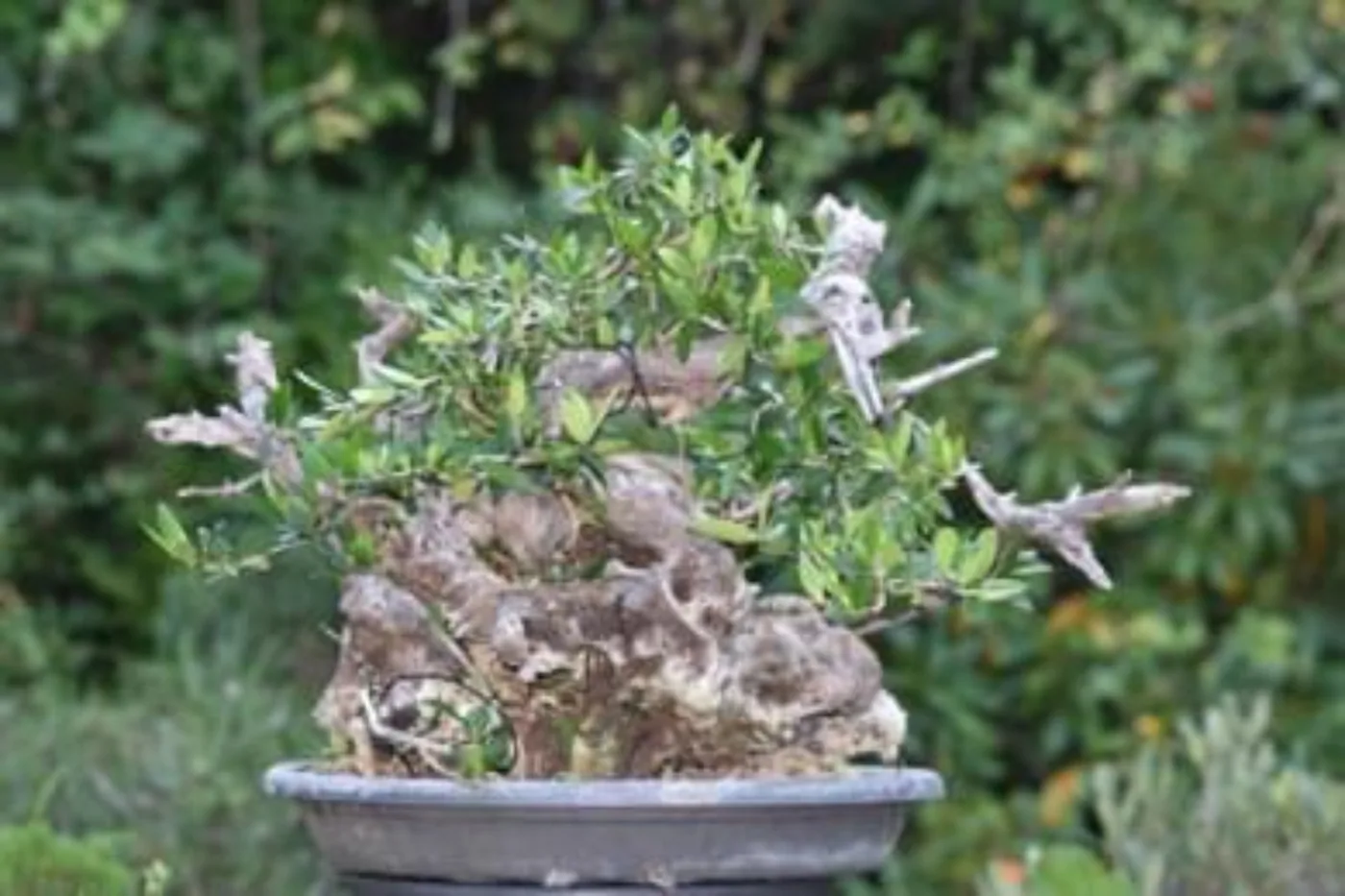
Climate before styling
Olea europaea is native across the Mediterranean and beyond into parts of Africa and Asia. It is adapted to bright conditions and seasonal water availability, but a potted tree’s roots are more exposed than a field-grown tree’s. In cool climates, protect it from damaging frost while preserving as much light as possible. A warm, dim room is a poor winter substitute.
Develop structure gradually
Olive can respond to pruning and may bud from older wood, but response depends on health and species or cultivar. The historical thresholds of 30 cm for young shoots and 5 cm for old trees are not useful universal rules. Let extension growth serve the development objective, then shorten or redirect it where taper, branch placement and vigor support the cut.
Water and substrate
Use a free-draining mix and water thoroughly when the root ball approaches the appropriate drying point for the season. Do not maintain constant saturation, and do not let a small pot become bone dry during hot, bright weather. A sheltered, sunny position outdoors during warm months can improve growth where local conditions allow.
Keep botanical names precise
Wild olive refers to forms or subspecies within a complex cultivated history; appearance alone is not enough to identify provenance. Kew recognizes Olea europaea as an accepted species. Label a bonsai by the identification supported by its source, not by a guessed wild status.
This page is reconstructed from historical BlogBonsai material. Horticultural details should be interpreted for the species, season, climate and condition of the individual tree.