Species and cultivar matter
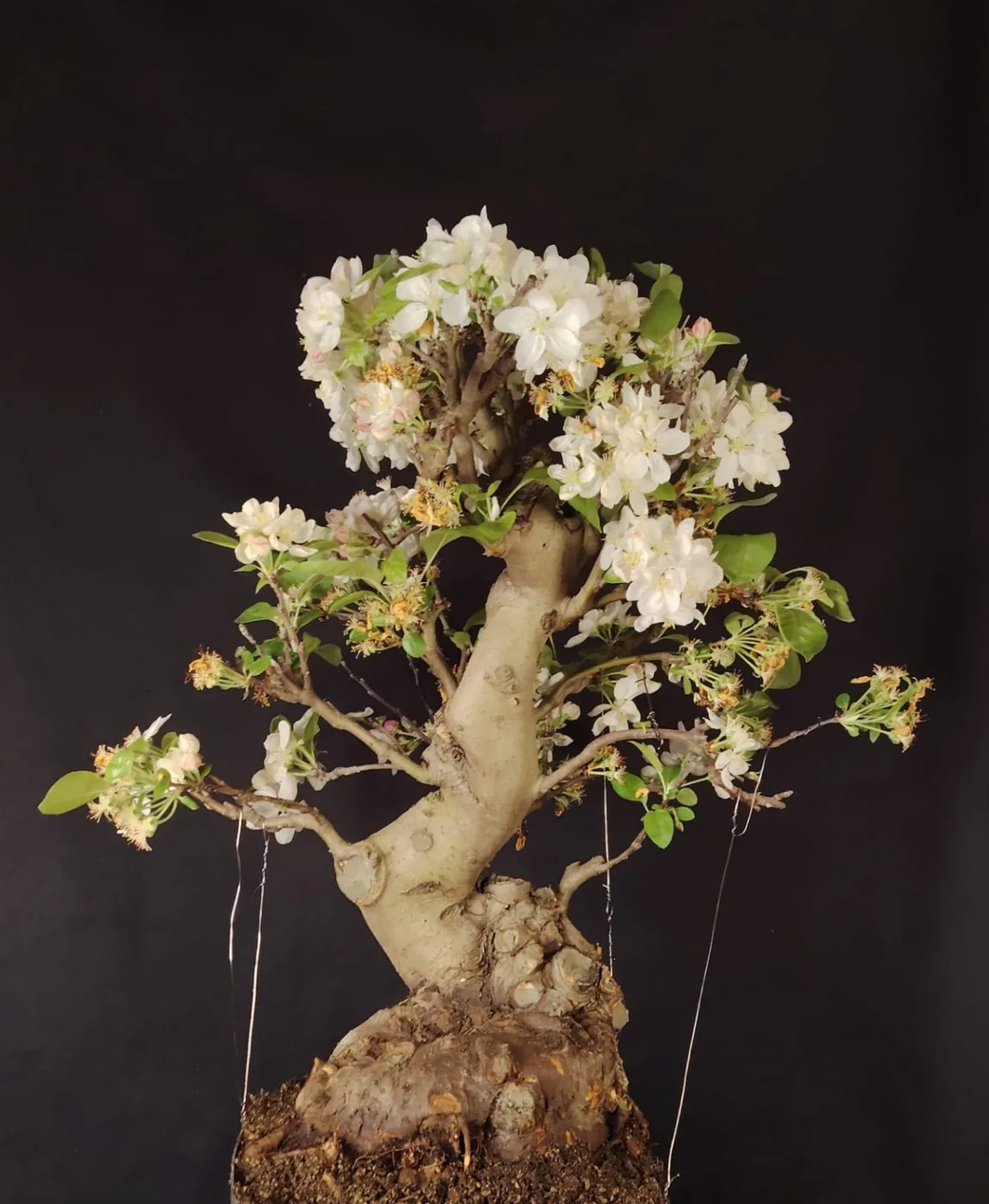
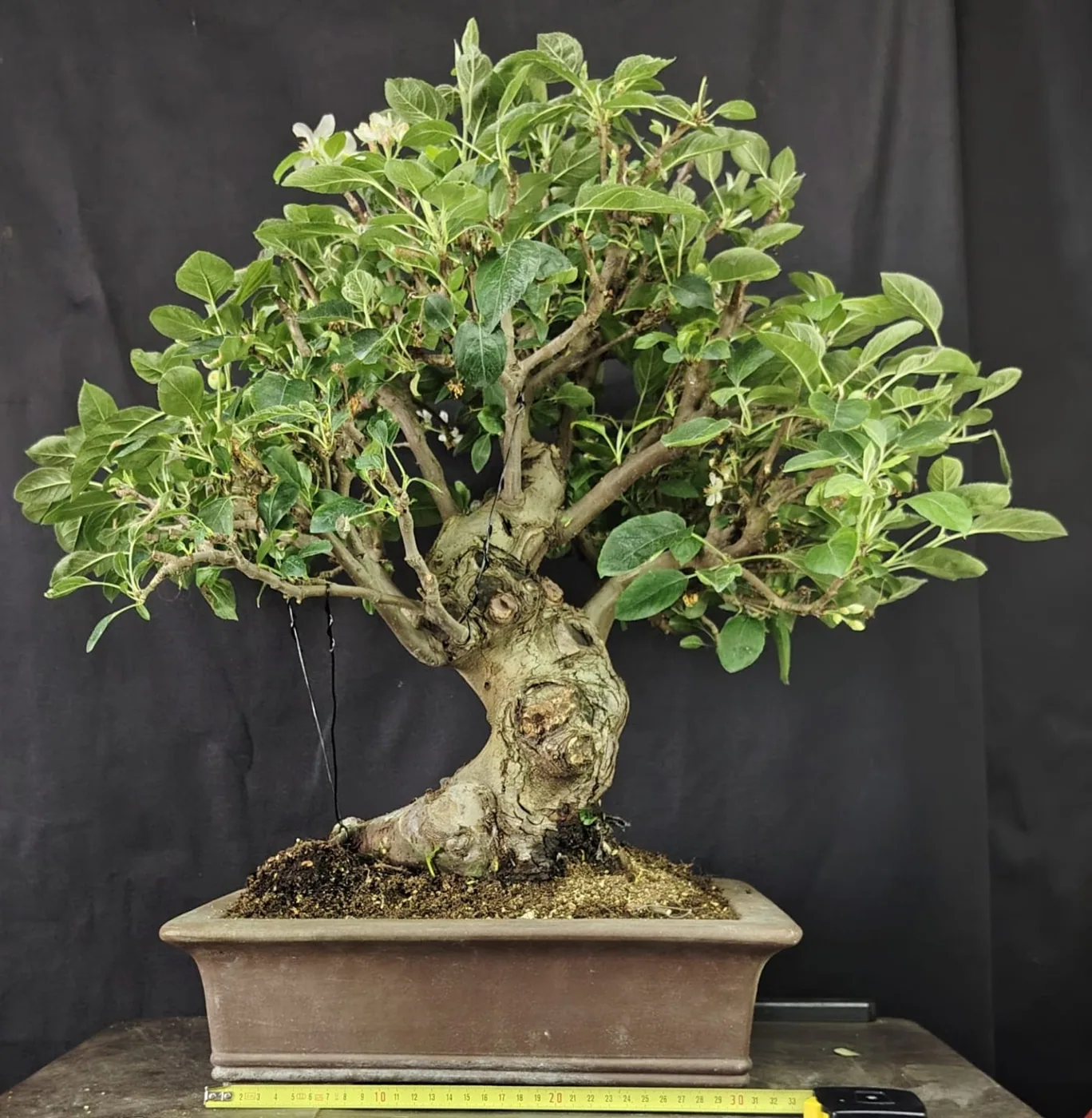
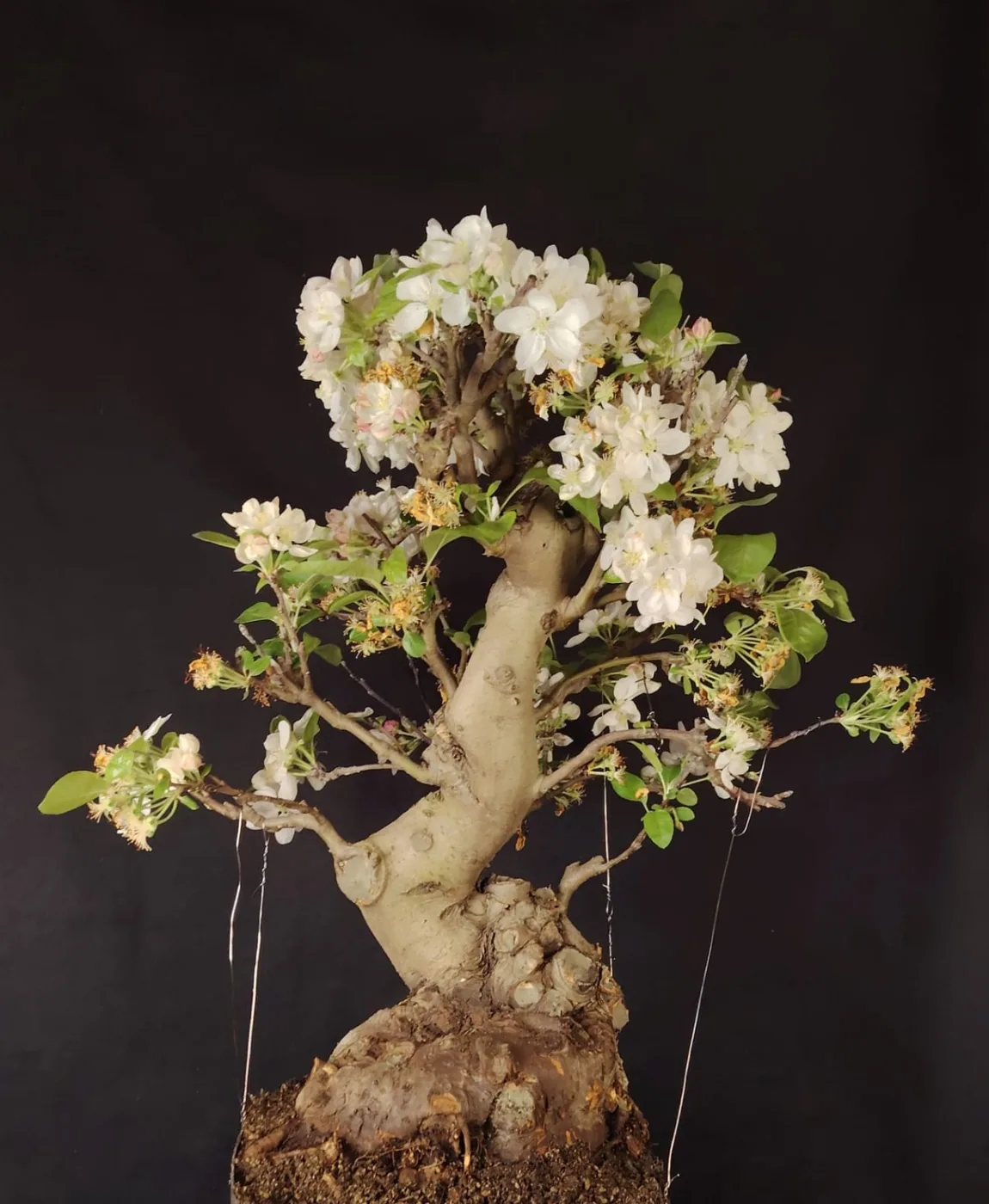
Malus includes many ornamental and fruiting species and cultivars. Flower color, fruit size, hardiness and disease susceptibility vary. Keep identification details; not every plant sold as “crabapple bonsai” is equivalent. Some cultivars need compatible pollen sources to set fruit.
Protect the next flower display
Apple flowers form on particular kinds of shoots and spurs, depending on cultivar and growth. Pruning at the wrong time may remove next year’s buds. Learn the tree’s flowering habit before shortening branches. Avoid routine defoliation, which can weaken a tree and disrupt its seasonal cycle.
Thin fruit for health and scale
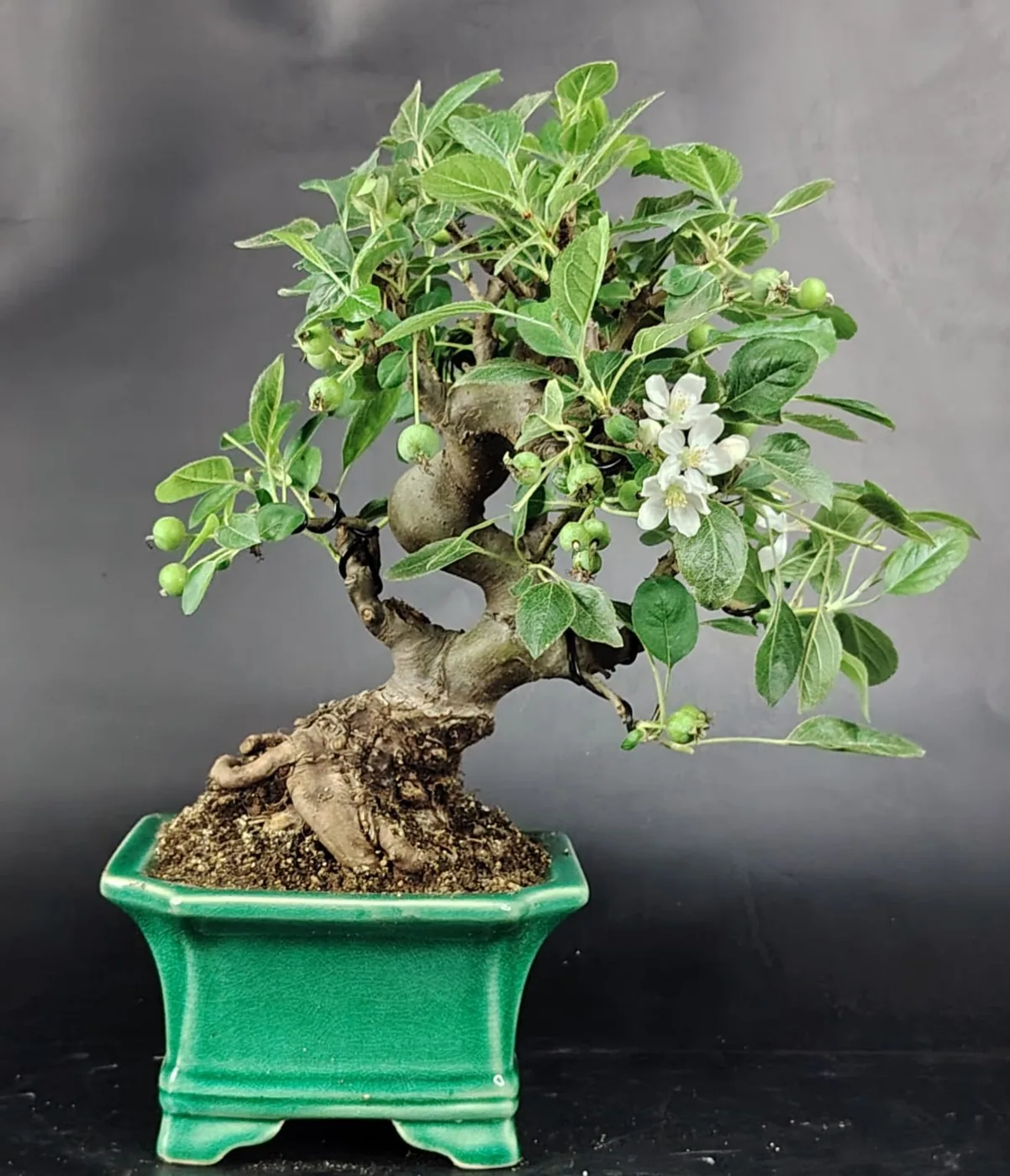
Fruit is visually appealing but consumes resources and can overload a small branch. Remove excess fruit, especially on young or weak trees, and support branches under load. If trunk development is the priority, removing all fruit may be the better choice.
Outdoor care and disease hygiene
Apple is a temperate outdoor subject. Provide seasonal light and protect roots in the pot from extremes. Monitor for common pests and fungal disease; remove infected material and follow local plant-health guidance. Use clean tools and avoid applying pesticides without diagnosis.
This page is reconstructed from historical BlogBonsai material. Horticultural details should be interpreted for the species, season, climate and condition of the individual tree.