Flowers need light and mature shoots
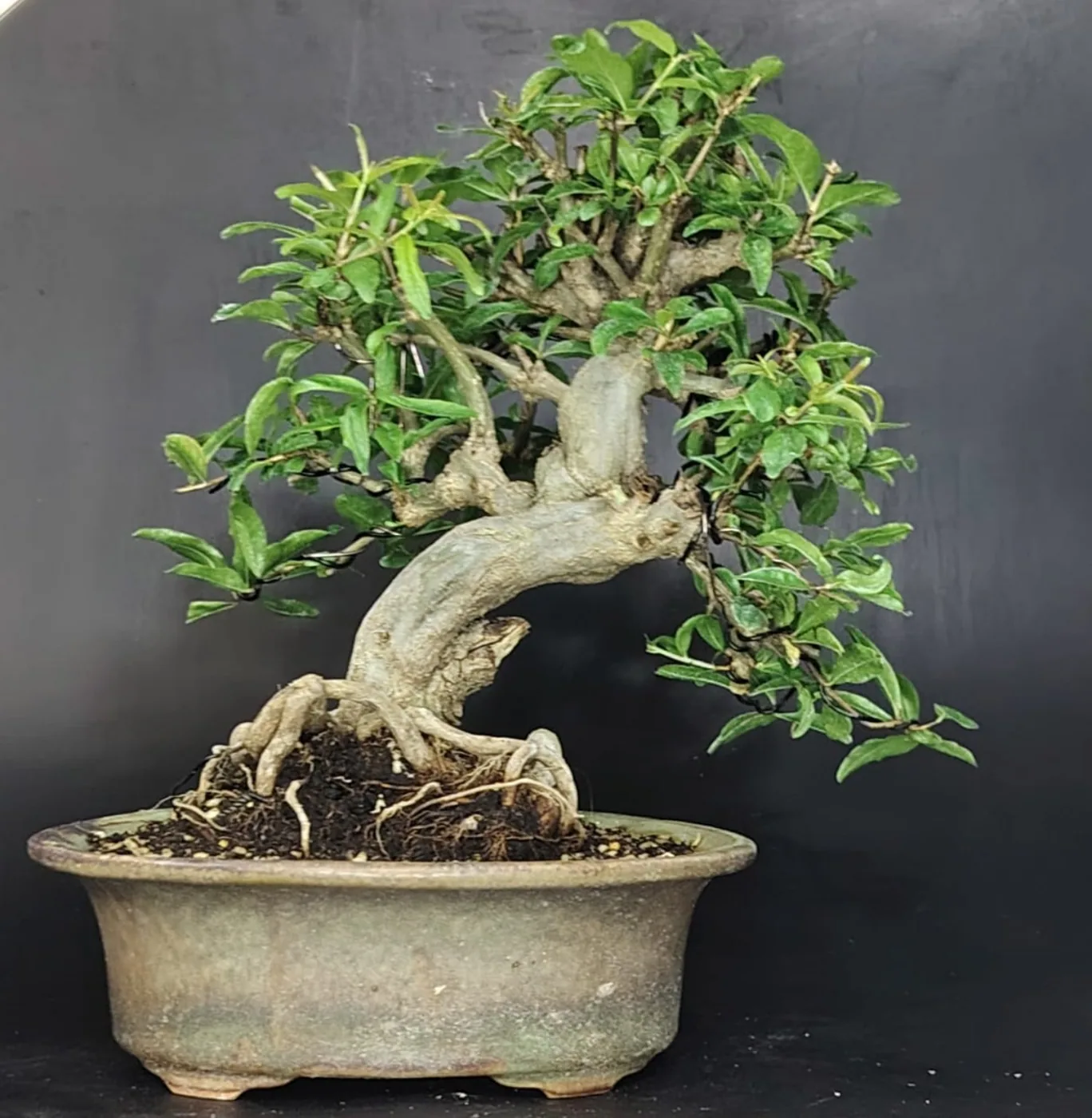
Punica granatum is cultivated in many forms, including dwarf selections used for bonsai. Flower color, fruit size and hardiness vary. Strong light and healthy growth support flowering; cuts made at the wrong stage can remove developing flower-bearing shoots. Learn where the cultivar flowers before pruning for shape.
Fruit is a design choice with a cost
A small tree may not be able to carry several fruits without weakening fine branches or slowing development. Thin fruit when needed and remove it entirely while building trunk or branch structure. Do not leave fruit as decoration if the tree is under stress.
Seasonal placement
Pomegranate is not a generic indoor bonsai. Hardiness varies by cultivar, and a pot is more exposed to cold than ground planting. In colder regions, provide a bright protected winter location that respects the plant’s dormancy needs; in mild climates, outdoor exposure may be suitable. Avoid abrupt moves between warm indoor air and cold outdoor conditions.
Avoid fixed repotting and pruning rules
Timing depends on climate, cultivar and vigor. Use clean cuts, retain useful shoots and repot only when the root system or substrate condition calls for it. A long-term record of flowering and growth will tell you more than a one-size schedule.
This page is reconstructed from historical BlogBonsai material. Horticultural details should be interpreted for the species, season, climate and condition of the individual tree.